
 Virtual Sessions
Arabic is the fifth-most-spoken language in the world, with more than 313m speakers. It is an official language in 25 countries - more than any other except English and French - and one of six official languages at the United Nations. As the vehicle of one of the great faiths, Islam, it is widely studied for religious reasons.
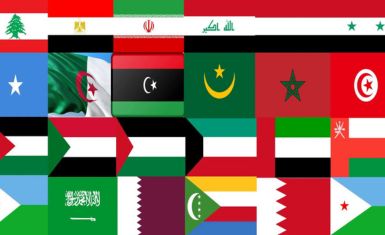
Arabic is the official language of the 22 countries that form the Arab League. There are more than 300 million Arabic speakers across the world, though they predominantly live in the region stretching across the Middle East and North Africa. It is also one of the six official languages of the United Nations (UN). Yet, in the UK, only one per cent of the adult population can hold a basic conversation in Arabic.
Many countries speak Arabic as an official language, but not all of them speak it the same way. The language has many dialects, or varieties, such as Modern Standard Arabic, Egyptian Arabic, Gulf Arabic, Maghrebi Arabic , Levantine Arabic and many others. Some of the dialects are spoken so differently from one another that some speakers have a hard time understanding the other. Many dialectic words however are nonetheless still rooted in the original, or classical language.
Arabic, across its various dialects, is one of the most popular languages on earth with no less than 25 countries where it is spoken, among them: Saudi Arabia, Somalia, Egypt, United Arab Emirates, Algeria, Tunisia, Morocco, Kuwait, Syria, Oman, Lybia, Lebanon, Sudan, Qatar, Bahrain, Iraq, Jordan, Palestine, Comoros, Chad, Djibouti, Eritrea, Israel, Mauritania and Yemen. Arabic is a Southern-Central Semitic language. It is spoken in most parts of the Arabian Peninsula, parts of Middle East and North Africa.
Arabic is a macrolanguage that has 30 modern varieties or dialects. Literary Arabic, which is also called Standard Arabic or Modern Standard Arabic (MSA), is used today in formal speech and in writing in the Arab world while Classical Arabic was used in Islamic literature of the 7th to 9th centuries. It is the language of the Qur'an.
The basis of the Modern Standard Arabic is the classical version and the differences between the two are related to simplification and modernization in writing and speaking styles. The MSA is used in the modern versions of the Qur'an and the modern editions of the novels and poetries from the Abbasid and Umayyad periods.
Benefits of learning Arabic
1. Arabic language can increase the demand for your skills. You will have an edge over competition. The demand for people fluent in Arabic is quite high. Fields that need Arabic speakers include intelligence and Foreign Service, consulting, banking and finance, education and journalism etc.
2. Arabic Language is A Channel of Islamic Culture. The Arabic Language is a channel of culture that has an indelible influence on its speakers. Arabic being the avenue of Islamic culture also has a favourable Islamic impact on its speakers.
3. Learning Arabic will increase your job opportunities. If you can read, write, and speak Arabic fluently, you will be in high demand for job opportunities for which Arabic is a requirement. Arabic is the primary language of commerce and business in most Arabic countries. Therefore, having it on your CV as one of your linguistic skills will increase your chances of getting employed.
4. Arabic is the official language of more than 25 Arabic countries, and it has more than 300 million speakers. Therefore, studying Arabic will open opportunities to travel, explore, or work in all Arabic-speaking countries.
5. Islam is the world's second-largest religion, and to most Arabs, it's not only a religion but a lifestyle. Language is at the heart of understanding a people's culture and religion. Therefore, learning to speak Arabic will let you understand Islamic traditions and beliefs. Learning Arabic is the gateway to understanding Islam and the Arabic way of life.
6. The Arab world has become more liberal and open. This has resulted in better trade relations and cultural exchanges between Arab nations and the rest of the world. For this reason, understanding Arabic is necessary for anyone seeking a deeper understanding of Arabic culture and Arabs' thinking patterns, thus deepening diplomatic and cultural relations.
7. Arabic skills are in high demand and could earn you a high annual salary. Job openings for Arabic speakers include translators, instructors, lecturers, interpreters, and bilingual employees.
8. Arabic is an incredibly beautiful language with a rich and poetic history. Its grammar and pronunciation are quite different from many other languages spoken in the world today, making it both interesting and challenging to learn. Even if you don't plan on using it professionally or in any practical way, learning Arabic can still be an enjoyable and rewarding experience.
Learning Arabic can open up a wealth of opportunities, both personal and professional. With dedication and effort, anyone can learn this fascinating language and reap the rewards it has to offer. So why not start learning today at Maior Lugha School of International Languages.